
Annual Quantum Public Lecture
The University of Calgary's Institute for Quantum Science and Technology holds an annual public lecture on the topic of quantum sciences and technologies.
Upcoming lecture
2015
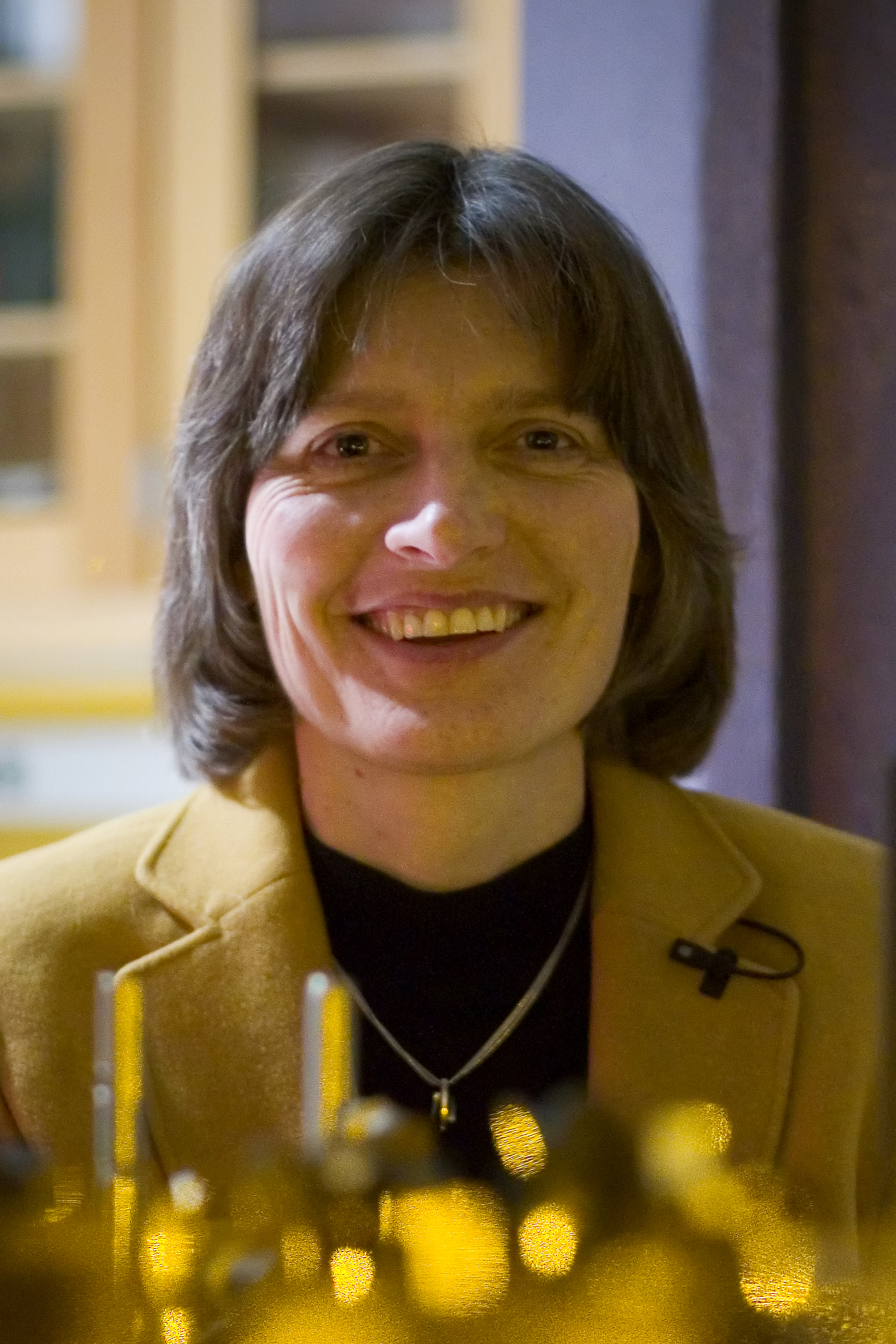 |
"Wizardry with light" Date: 17 September 2015 |
Abstract: Professor Lene Vestergaard Hau led a Harvard University team who, by use of a Bose-Einstein condensate, succeeded in slowing a beam of light to about 17 metres per second, and, in 2001, was able to stop a beam completely. Later work based on these experiments led to the transfer of light to matter, then from matter back into light, a process with important implications for quantum encryption and quantum computing. More recent work has involved research into novel interactions between ultracold atom and nanoscopic scale systems. As well as her own experiments and research, she is often asked to speak at International Conferences, and is involved in structuring the science policies of various institutions. She was keynote speaker at EliteForsk-konferencen 2013, (Elite Research Conference) in Copenhagen, 7 February 2013, which is attended by government ministers, as well as senior science policy and research developers in Denmark. She won Carlsberg Foundation’s Research Award from the Royal Danish Academy of Sciences and Letters on 6 October 2011. She was awarded the The H.C. Ørsted Lectureship 2010 and is the recipient of 'World Dane 2010' from the Global Network of Danes Worldwide. She was elected an American Association for the Advancement of Science (AAAS) Fellow in 2009.
A reception will follow after the lecture. Registration will open very soon.Past public lectures
2015
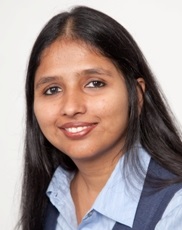 |
"Seeing the invisible: Journey into the quantum world" Date: 11 June 2015 |
Abstract: From atomic structure, to the composition of stars, to teleportation, quantum physics has led to amazing discoveries over the past century. Understanding the microscopic world of atoms and photons has also led to modern technologies like lasers and computers that have transformed our everyday lives. Yet the quantum world remains a mysterious place full of bizarre phenomena such as entanglement and quantum uncertainty. This is the story of my voyage into this weird and wonderful invisible world, and the surprising lessons I learned about physics and about being a physicist.
2014
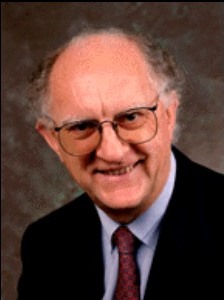 |
"The SQUID at 50: from cosmology to medicine" Date: 2 October 2014 |
Professor John Clarke received his B.A. (1964), Ph.D. (1968), and Sc.D. (2005) from Cambridge University. After a postdoctoral fellowship at UC Berkeley, he joined the Physics faculty in 1969. He received the Distinguished Teaching Award in 1983. He is a fellow of the Royal Society of London, the American Physical Society, the American Association for the Advancement of Science, and the Institute of Physics (UK). He has been a Sloan Foundation Fellow, a Guggenheim Fellow and a Miller Professor. In 1987, he was named California Scientist of the Year and was awarded the Fritz London Prize for research in low-temperature physics. In 1998, he received the American Physical Society's Joseph F. Keithley Award for Advances in Measurement Science and, in 1999, the National Academy of Sciences' Comstock Prize for Physics. He was awarded the Hughes Medal of the Royal Society in 2004, and was the UC Berkeley Faculty Research Lecturer in 2005.
2013
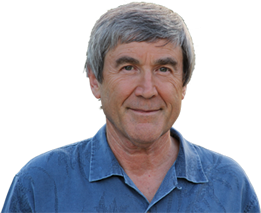 |
"Time travel: can it really be done?" Date: 20 September 2013 |
Professor Davies made seminal contributions in the area of "quantum field theory in curved space-time" and is an author of numerous best selling popular science books. His prestigious awards include the Kelvin Medal, the Faraday Prize and the Templeton Prize.
2012
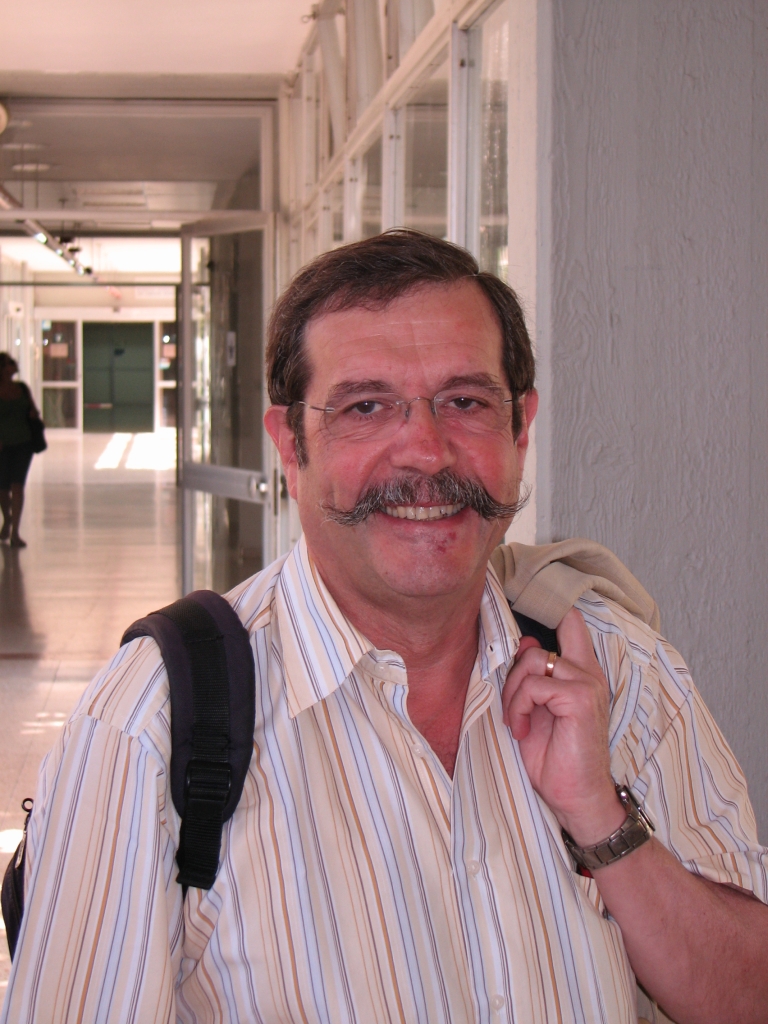 |
"From Einstein's LichtQuanten to Wheeler's delayed choice: wave particle duality for a single photon" Date: 26 April 2012 |
Since the early days of quantum mechanics, and still in Feynman's lectures on physics, interference between spatially separated trajectories of a single particle has not ceased to fascinate physicists. I will present a realization in optics of that GedankenExperiment, realized with a true single photon source. It has even allowed us to implement Wheeler's delayed choice experiment, emphasizing the weirdness of wave particle duality for a single particle.
Alain Aspect is an internationally acclaimed physicist at the École Polytechnique in Paris. He is a pioneer in the foundations of quantum physics, including celebrated demonstrations of quantum non-locality (sometimes referred to as Einstein's spooky action at a distance). He received the 2010 Wolf Prize in Physics, which is one of the world's top science awards. In addition to his beautiful, convincing experiments, Dr. Aspect is famous for the clarity and general appeal of his presentations.
2011
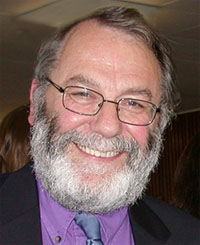 |
"Quantum Technologies for the 21st Century" Date: 22 September 2011 |
Professor Sir Peter Knight FRS is Principal of the Kavli Royal Society International Centre and holds an emeritus position at Imperial College London. He has made numerous contributions to quantum physics, which have been recognized through prestigious awards including the Thomas Young and the Glazebrook Medals of the U.K. Institute of Physics, the Ives Medal of the Optical Society of America, the Royal Medal of the Royal Society and being knighted by the Queen in 2005. Until last year, Sir Peter was Chair of the Defence Scientific Advisory Council at the United Kingdom Ministry of Defence and continues as a science advisor to the U.K. Government.
2010
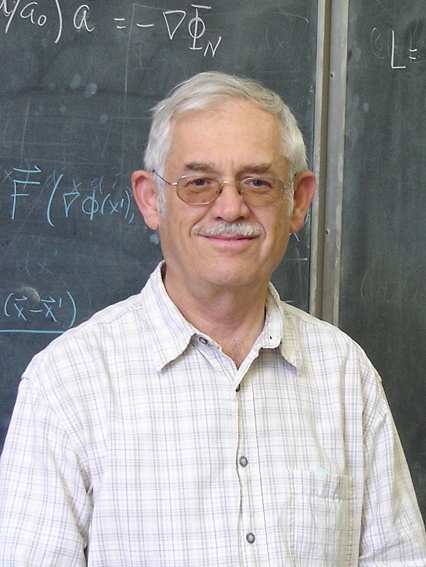 |
"The Limits of Information and Black Holes" Date: 2 June 2010 |
Professor Bekenstein was John Wheeler's doctoral student at Princeton University and is now Polak Professor of Theoretical Physics at the Hebrew University. He is a member of the Israel Academy of Sciences and Humanities and a recipient of the Israel Prize. He discovered the theory of black hole thermodynamics, which resulted in the famous Bekenstein-Hawking theory of black-hole radiation.
Professor Bekenstein will tell us the absolute limit to information storage in any region of space and time by thinking of our world as a boundary for a larger-dimensional universe.